Creating VPP Documents
These instructions show how the VPP documentation sources are built.
The VPP Documents are written using reStructuredText (rst), or markdown (md). These files are then built using the Sphinx build system Sphinx.
Get the VPP sources
Start with a clone of the vpp repository.
$ git clone https://gerrit.fd.io/r/vpp
$ cd vpp
Create a Virtual Environment using virtualenv
For more information on how to use the Python virtual environment check out Installing packages using pip and virtualenv.
In the vpp root directory on your system, run:
$ python -m pip install --user virtualenv
$ python -m virtualenv env
$ source env/bin/activate
$ pip install -r docs/etc/requirements.txt
$ cd docs
Which installs all the required applications into it’s own, isolated, virtual environment, so as to not interfere with other builds that may use different versions of software.
Build the html files
Be sure you are in your vpp-docs/docs directory, since that is where Sphinx will look for your conf.py file, and build the .rst files into an index.html file:
$ make html
View the results
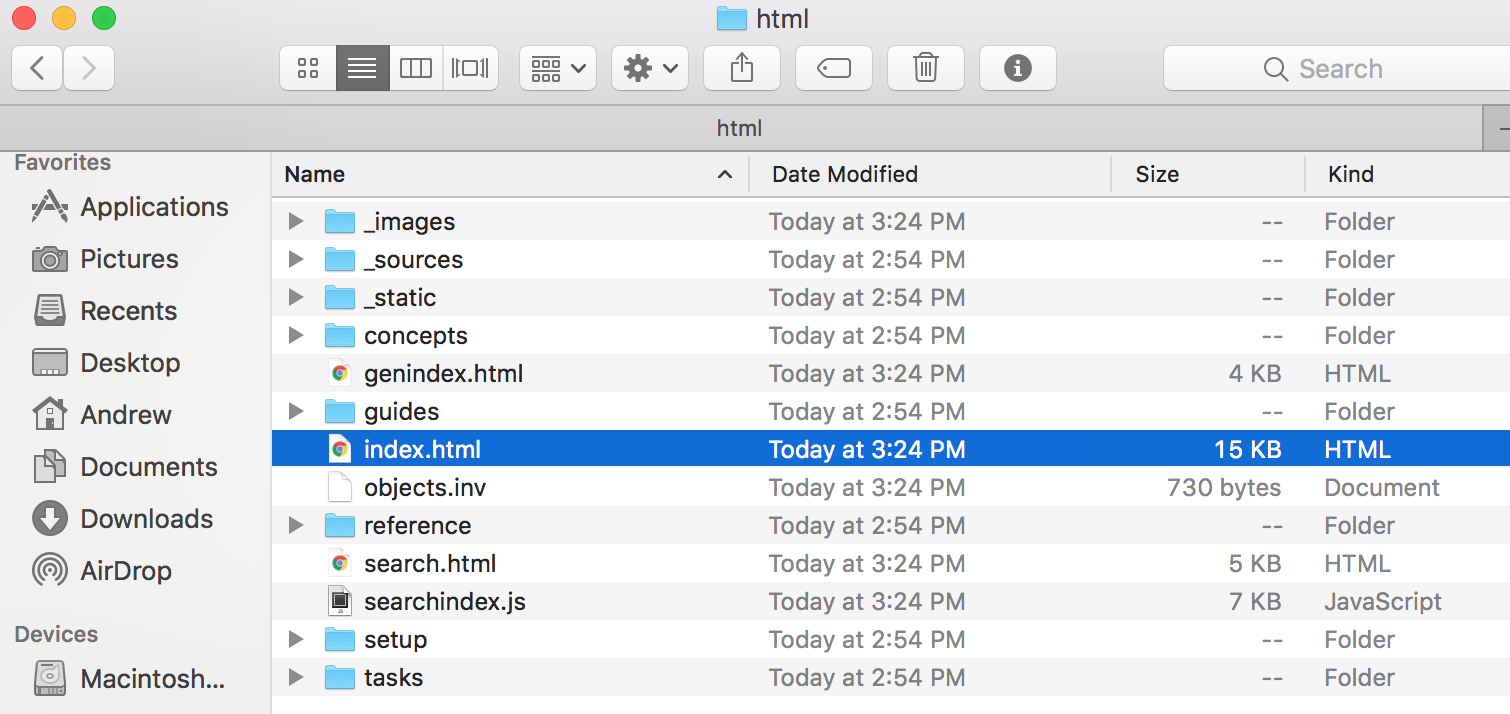
Whenever you make changes to your .rst files that you want to see, repeat this build process.
Note
To exit from the virtual environment execute:
$ deactivate
Getting your documents reviewed and merged
VPP documents are reviewed and merged like and other source code. Refer to Getting a Patch Reviewed to get your changes reviewed and merged.